Newsroom
Stay informed with our latest news and announcements on this page. For more in-depth content, we also encourage visitors to explore our bimonthly STRUCTURES Newsletter magazine, which features a variety of articles, interviews with members, and background information on our latest research and activities.

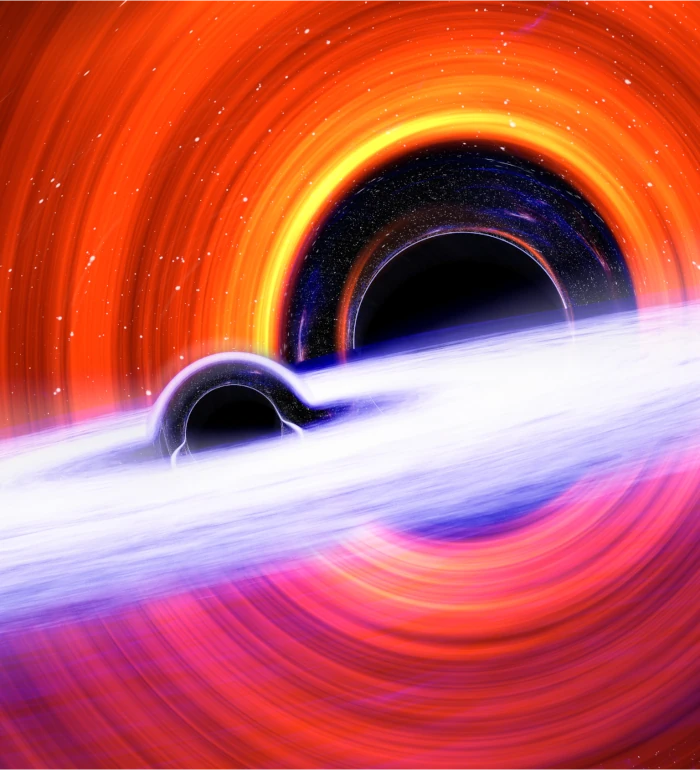

Image credits: Derek Davis / University of Rhode Island / LIGO – Virgo – KAGRA.
The international LIGO–Virgo–KAGRA (LVK) Collaboration has released its latest catalogue of gravitational-wave detections, adding 161 new events observed between April 2024 and January 2025. The new data reveals evidence for the existence of second-generation black holes, provides the most precise sky localization ever achieved for a gravitational wave source, and offers the first measurement of three vibrational modes of a black hole.
The international network of gravitational wave detectors LIGO, Virgo and KAGRA (LVK) has announced today the online release of an updated catalogue of all gravitational wave events observed to date, named the Gravitational Wave Transient catalogue-5.0 (GWTC-5), with the corresponding scientific papers in submission to Astrophysical Journal and Astrophysical Journal Letters. The data analysed in this work were collected by the detectors between April 2024 and the end of January 2025, during a portion of the fourth observing run known as O4b. During this period, 161 new gravitational wave events were detected, bringing the total number of confirmed events observed by the network since the first detection in 2015 to an astounding 390. The international LVK network consists of the twin detectors of the US National Science Foundation Laser Interferometer Gravitational-wave Observatory (NSF LIGO) , the Virgo detector hosted by the European Gravitational Observatory in Italy and the Japanese KAGRA hosted by the Institute for Cosmic Ray Research (ICRR) of the University of Tokyo.
The new catalogue of gravitational wave events allows researchers to study black hole populations in unprecedented detail. “The new catalogue is a gold mine of discoveries, but it also poses new challenges,” says Michela Mapelli, STRUCTURES professor at the Center for Astronomy of Heidelberg University and directly involved in the studies. “For example, the spins – that is, the magnitudes and orientations of the rotations – of the components of two new binary black hole systems, GW241011 and GW241110, are exactly what we expect for second-generation black holes: black holes formed through the merger of smaller black holes.” At the same time, the new study finds that the masses of these black holes, about 10–20 times the mass of the Sun, are lower than predicted by most theoretical models. “This is a new enigma that will keep compact-object astrophysicists busy for quite some time!” says Michela Mapelli.
The new study also provides the most precise sky localization ever obtained for a gravitational-wave source. A signal known as GW240615 was identified within an area of just 6 square degrees, a very small portion of the celestial sphere. This exceptional performance was achieved thanks to the triangulation using data from all three detectors. At the same time, the catalogue includes the “clearest” gravitational wave signal ever detected, with a signal-to-noise ratio of 76.9. This signal, GW250114, reached Earth on January 14, 2025 and was generated by the merger of two black holes with nearly identical masses. After the collision, a newly formed black hole “rings” as it settles into its final shape – similar to how a bell vibrates and produces different tones. For the first time, scientists were able to measure multiple such “tones” – or vibrational modes – in a black hole signal, offering a new way to test Einstein’s theory of general relativity under extreme conditions. The results were in agreement with the predictions of general relativity.
Michela Mapelli is a STRUCTURES Professor working at the Center for Astronomy of Heidelberg University (ZAH), where she leads the group “DEMOBLACK - Demography of Black Hole Binaries in the Era of Gravitational-Wave Astronomy”. Her main research focus is understanding the formation of astrophysical black holes. Prof Mapelli joined STRUCTURES in 2023.
The LIGO–Virgo–KAGRA (LVK) Collaboration is the international network operating the world’s leading gravitational-wave observatories: the two LIGO detectors in the United States, Virgo in Italy, and KAGRA in Japan. Together, the collaboration brings together several thousand researchers from hundreds of institutions worldwide to detect and study gravitational waves from colliding black holes, neutron stars, and other compact-object mergers.
Further information:
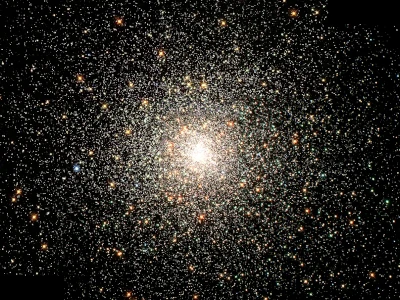
The biggest black holes in the Universe may not be born from collapsing stars. A new study involving STRUCTURES professor Michela Mapelli and collaborators at Cardiff University suggests they instead form through violent merging events in very densely populated star clusters.
The researchers analysed the new LIGO-Virgo-KAGRA Gravitational Wave Transient Catalog to test whether the heaviest black holes were, in reality, second generation objects formed after successive merging processes in a star cluster. In the data analysed, the authors found two different populations, a low-mass one consistent with ordinary stellar collapse and a higher-mass population, whose rapid, randomly oriented spins are a signature of repeated merging in dense star clusters.
The results of this study, published in Nature Astronomy, provide new evidence for the long-predicted pair-instability mass gap – a “forbidden” mass range for black holes made from stars. While gravitational-wave observations have detected black holes lying within that range, the new analysis suggests that these objects are likely merger-built black holes, not ordinary “first-generation” black holes formed directly from stellar collapse.
The findings highlight how gravitational-wave astronomy is moving beyond simply counting merger events. Observations can now be used to verify new theories, allowing scientists to probe the birth, life, and death of black holes. Such information will help us understand the evolution of stars and clusters in the Universe and challenge current models of stellar evolution. Progress is also expected in nuclear physics, where the mass limit set by pair instability depends on nuclear reactions in the cores of massive stars.
The research was carried out by an international team of scientists led by Cardiff University, with contributions from institutions including Heidelberg University's Center for Astronomy (ZAH) and the STRUCTURES Cluster of Excellence. Cardiff University is one of Britain’s leading research universities, and a member of the Russell group of the UK most-research intensive universities. Heidelberg University is Germany’s oldest university and, as a leading European research institution, member of Germany’s Excellence Strategy.
Further information:
We are pleased to welcome Felix Otto (MPI Leipzig) for the next Mathematical Colloquium on Thursday, 23 April 2026, at 16:15 in the Mathematikon lecture hall. Felix Otto, Director of the MPI in Leipzig and a leading expert in analysis and partial differential equations, will give a talk entitled “Convection-enhanced diffusion, and Brownian motion on the Lie group SLn”.
Abstract:
This talk draws a connection between a well-known phenomenon in fluid dynamics and an object from differential geometry. On the one hand, the ubiquitous phenomenon is that advection by a turbulent divergence-free drift effectively (and dramatically) enhances the diffusion of particles in n-dimensional Euclidean space. On the other hand, the object from differential geometry is a natural notion of Brownian motion on SLₙ, the Lie group and Riemannian manifold of matrices of unit determinant; it is a tensorial version of geometric Brownian motion.The connection is established by tracking the relative position of a pair of particles as a function of their initial configuration and involves a change of time variables: the “time” parameter for the Brownian motion on SLₙ is given by the logarithm of the effective diffusivity of the particles, which increases with physical time.
This is joint work with Peter Morfe and Christian Wagner.
All interested colleagues and students are warmly invited to attend.
Further information:

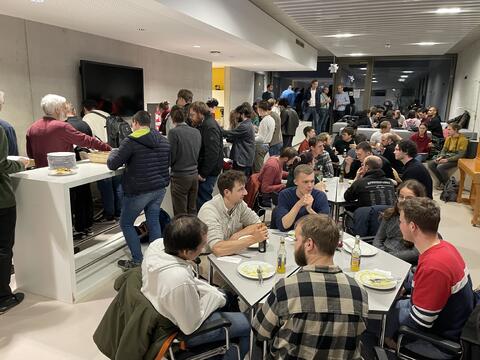
We are delighted to announce the next event in our Machine Learning Galore! series, focusing on Scientific Machine Learning, which will take place on Wednesday, April 29, from 4:30 to 6:00 pm at INF 205 Mathematikon (5th floor). The event features lab presentations by principal investigators, followed by brief presentations from junior scientists showcasing their latest work. Extended discussions will offer ample opportunity for in-depth exchanges.
Event Details:
- Lab presentations:
- Sascha Diefenbacher
- Lutz Greb
- Christoph Schnörr
- Science Talks:
- Sascha Diefenbacher: Forecasting Generative Amplification
- Andreas Albers (Greb lab): Machine Learning for Molecular Property Prediction: Revisiting Empirical Chemistry with Big Data
- Jonas Cassel (Schnörr lab): Vector Bundle Data Models and Geometric Deep Learning
Registration is free but required via the ML-AI portal:
https://www.mlai.uni-heidelberg.de/en/machine-learning-talks-on-campus
About Scientific Machine Learning:
Scientific Machine Learning is a collaborative initiative by the Interdisciplinary Center for Scientific Computing (IWR) and the STRUCTURES Cluster of Excellence. Its mission is to foster interaction and exchange within the local machine learning community, and to support its development by consolidating activities and resources that might otherwise remain scattered across individual institutions or disciplines. The initiative aligns closely with the objectives of STRUCTURES, which aims to advance fundamental research, and with IWR’s focus on applying machine learning to address long-standing challenges in the natural and life sciences, engineering, and the humanities.
Further information:

We congratulate our member Alicia Castro on receiving funding through the Olympia Morata Programme of Heidelberg University, following a competitive selection process.
Dr. Alicia Castro is a postdoctoral researcher at STRUCTURES and a member of the STRUCTURES Young Researchers Convent (YRC). Her research at the Institute for Theoretical Physics explores the fundamental structure of spacetime at the smallest scales, where familiar notions such as distance, volume and dimension break down. Using methods from random geometry, her work examines how these classical properties emerge in the context of quantum gravity and how they fluctuate.
In this approach, quantum spacetime is modelled as a collection of many possible geometries rather than a single fixed one. This makes it possible to capture microscopic fluctuations of spacetime expected in quantum gravity, and lays the foundation for more detailed studies of the microscopic structure of the universe. “I aim to connect the mathematical ideas of random geometry with the physical behaviour of spacetime, offering a clearer picture of how the universe behaves under extreme conditions,” Alicia Castro says.
“With the support of the Olympia Morata Programme, I will establish the foundations of an independent research agenda that positions me to apply for grants to start my own group,” she adds.
The Olympia Morata Programme supports excellent postdoctoral researchers with outstanding qualification projects, as they work toward higher academic qualifications (e.g. habilitation or equivalent achievements). The programme targets female and gender-diverse researchers, aimed at supporting their academic career progression as part of Heidelberg University's commitment to promoting equitable opportunities in academic careers. As part of the programme, recipients are appointed to two-year fixed-term positions and benefit from additional training and career development opportunities. The programme is named after Olympia Fulvia Morata, a 16th-century humanist scholar who taught in Heidelberg.
Further information:

We are delighted to announce the first edition of the Geometry Space Surrey workshop, which will take place June 8-10, 2026 at the University of Surrey in Guildford, UK. Supported by the STRUCTURES Cluster of Excellence at Heidelberg University, the workshop is the first event of its kind, bringing together researchers working at the interface of symplectic geometry and astrodynamics.
The aim of the meeting is to bring together researchers from both communities to discuss recent developments at the intersection of these two fields, identify promising directions for future research, and foster new collaborations. By creating a dedicated forum for exchange, the workshop seeks to encourage sustained dialogue between mathematicians and researchers working in space dynamics.
Over three days, the programme will feature six plenary lectures, 15-20 contributed research talks, and a poster session for early-career researchers. In addition, a social dinner in Guildford is planned for the evening of the second day. Interested participants may also choose to stay on the morning of Thursday, June 11 for a guided tour of the SSTL (Surrey Satellite Technology Limited) facilities, to see first-hand how satellites are being built for specific missions.
“The goal is to see how symplectic geometry, a branch of abstract mathematics aimed at understanding physics in a geometric way, can influence space mission design and optimization,” said Dr Arthur Limoge, a STRUCTURES YRC alumnus at the Surrey Space Centre, who is organizing the workshop with Dr Nicola Baresi of Surrey Space Centre and University of Surrey mathematicians Prof David Lloyd and Prof Tom Bridges. “We want to enable space engineers to interact with mathematicians and space industry experts to see how we can gain understanding of complex space mission design problems such as trajectory design and surveillance in the Sun-Earth-Moon system," added Nicola Baresi.
Registration is now open on the workshop website. Early-bird rates are available until 14 April 2026, and registration closes on 14 May. During the registration process, participants will be able to submit abstracts for the research talks and poster session. Submissions are welcome on any topic relating to astrodynamics, symplectic/differential geometry, Hamiltonian dynamics, geometric mechanics, geometric integrators, geometric optimal control, and related areas.
The workshop is supported by the STRUCTURES Cluster of Excellence at Heidelberg University, which promotes interdisciplinary research into the mathematical and physical structures underlying complex systems. By encouraging dialogue between mathematics and space dynamics, the meeting reflects STRUCTURES’ broader interest in fostering connections between fields that rarely interact directly.
Further information:

On Thursday, April 23, 2026, various institutes across Heidelberg University will open their doors for Girls'Day, a nationwide initiative aimed at inspiring girls to explore career paths in IT, craftsmanship, natural sciences, and technology – fields where women are still underrepresented. Several STRUCTURES members and participating institutions are offering an engaging course programme for the Girls'Day.
As part of the full-day program “Physics Up Close” at Heidelberg University's Department of Physics & Astronomy, numerous research groups will open their doors and provide female students with exciting insights into current research topics – ranging from quantum physics and astrophysics to environmental physics, computer science, and artificial intelligence. The courses are complemented by the initiative “MINTmachen!”, hosted by the Department of Mathematics & Computer Science and DKFZ, which offers a diverse programme consisting of lectures and workshops on the topics of mathematics and computer science.
A few places are still available. Registration for the workshops is possible at the following webpages:
- Physics Up Close Webpage: https://www.physik.uni-heidelberg.de/girlsday/programm?menuid=274
- MINTmachen!: https://www.mathinf.uni-heidelberg.de/de/outreach/mintmachen/girlsday-2026-mintmachen
Further information: