Newsroom
Stay informed with our latest news and announcements on this page. For more in-depth content, we also encourage visitors to explore our bimonthly STRUCTURES Newsletter magazine, which features a variety of articles, interviews with members, and background information on our latest research and activities.
We are happy to announce the SIMPLAIX Inaugural Symposium on April 12. In the new SIMPLAIX collaboration, researchers from HITS, Heidelberg University, and Karlsruhe Institute of Technology (KIT) are addressing challenges in the simulation of biomolecules and molecular materials by pooling their expertise in multiscale computer simulation and machine learning. The collaboration is funded by the Klaus Tschira Foundation and will be launched on 12 April 2022 at Studio Villa Bosch, Heidelberg.
The schedule is available here (PDF).
See also: SIMPLAIX Website

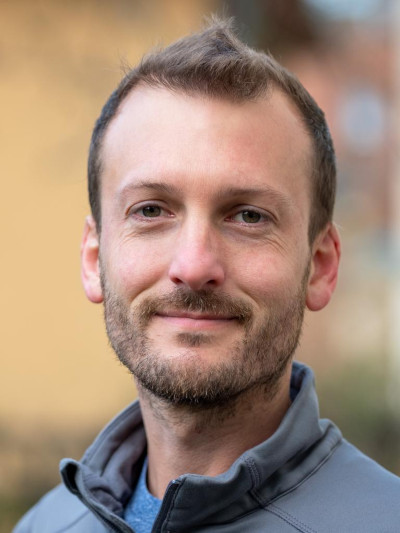
Dylan Nelson studied at the University of California in Berkeley and at Harvard University (both USA). After earning his doctorate in 2015, he became a post-doctoral researcher at the Max Planck Institute for Astrophysics in Garching near Munich. Since 2020 he has directed the Emmy Noether research group “Computational Galaxy Formation and Evolution”, which explores the origins and development of galaxies with computer support. “We want to understand how gas flows in, out of and around galaxies,” underlines the astrophysicist. In order to understand the evolution of cosmic structures over time, Dr Nelson’s research group is developing numerical simulations. “With the funds from the Award and the additional doctoral position, we can explore new simulation techniques and applications of current machine learning methods,” says Dylan Nelson.See also:

The STRUCTURES Young Researcher's Convent (YRC) is happy to announce another talk in its 'Almost-a-PhD' series:
Tuesday, April 12, 6.00pm: Tobias Haas: An Entropic Perspective on Equilibrium, Uncertainty and Entanglement. (online via Zoom, German).
The talk will be in German this time, as it will be the language of Tobi's defence.
About the 'Almost a PhD' lecture series:
In the 'almost a PhD' talks, PhD students shortly before their defence can practice their PhD talk. The presentation will be followed by questions and, if wanted, a short round of feedback. In this format PhD candidates benefit by practising their talk in front of a live audience and listeners are presented with understandable and hopefully high quality talks about a broad variety of current research topics. And if you are currently in your PhD yourself, you can collect ideas for your own talk in the future! If your defence is coming up and you are keen to practice your talk yourself, send a mail with your topic and your preferred date to the YRC.
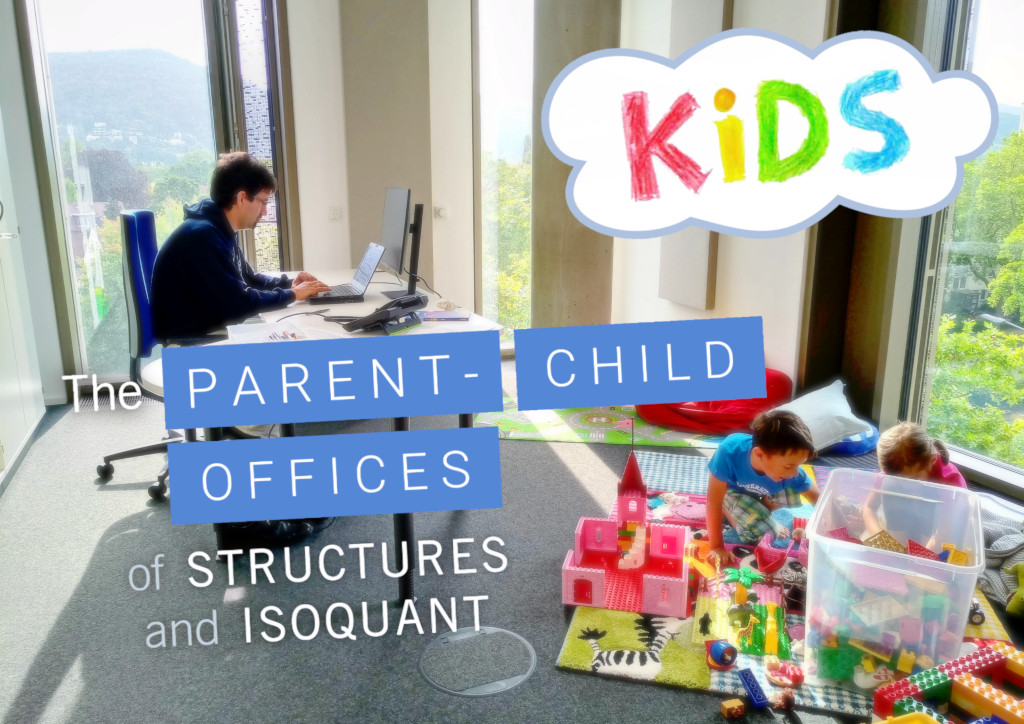
Do you want to go to the office and have a child with you, or would you like a relaxing nursing room right by your workplace? Then we have the right place for you! “KIDS”, the new parent-child offices at Philosophenweg and Mathematikon, are open to all participants of the STRUCTURES and ISOQUANT projects. Several fully equipped workstations, a group room as well as a quiet room for breastfeeding, a kitchenette and numerous play corners for the little ones are waiting for you. For more information, go to https://ekb.thphys.uni-heidelberg.de/ – register on our website and book your desired workspace flexibly! If you have any questions, please feel free to contact us at any time: ekb@uni-heidelberg.de. We look forward to welcoming you and your kids in our offices!
For more information and pictures, have a look at the KIDS flyer:
Flyer German | English (PDF, 1.6MB).
“The whole is greater than the sum of its parts.” This phrase, often attributed to Aristotle, eloquently captures the essence of one of the most fascinating properties of nature: Emergence. When several parts of a physical system – whether atoms, birds or stars – interact with each other, new properties can be observed that its single parts do not have on their own. This phenomenon is the focus of the new episode by “Welt der Physik”'s podcast “Emergenz”, in which Manfred Salmhofer from STRUCTURES explains how such emergent properties arise and what role they play in physics.
The podcast is available in German at the “Welt der Physik” webpage:
Welt der Physik: Folge 330 – Emergenz (in German, Feb. 10, 2022).
NEW DATE: Ruperto Carola Lecture Series STRUCTURES: „Strukturen in der Musik Johann Sebastian Bachs“ on February 7, 2022
We are delighted to announce that Prof. Dr. Andreas Kruse's talk on „Strukturen in der Musik Johann Sebastian Bachs“ will take place on February 7 at 7:30 pm at the Aula der Neuen Universität (Access limited to 2G+, FFP-2 mask mandatory).
The talk, which will be in German, focuses on structure in compositions by Johann Sebastian Bach, explaining the term “structure” in music by the example of Viennese Classicism and analyzing themes and motifs of single works by Bach, before addressing the compositional technique of the fugue. Prof. Dr. Andreas Kruse is expert on music, author of the book „Die Grenzgänge des Johann Sebastian Bach“ and Senior professor distinctus at Heidelberg University.
The event will take place as part of the Ruperto Carola Lecture Series (Ruperto Carola Ringvorlesung) STRUCTURES, which focuses on the emergence and description of structures in mathematics and physics, human society, the human body, literature and music. The lecture series is organized by Matthias Bartelmann, STRUCTURES member, and Manfred Salmhofer, speaker of STRUCTURES.
See the University press release here (in German, February 3, 2022).
We are happy to present the fifth volume of the STRUCTURES newsletter, which features the following topics:
- Pg. 1: New EPs – ERC Starting Grant for Lauriane Chomaz – Members News
- Pg. 2: STRUCTURES asks: Lauriane Chomaz
- Pg. 3: CP 3: Modeling Cell Mechanics with the Finite Element Method
- Pg. 4: News from the YRC – We Are STRUCTURES
The STRUCTURES Office is happy to answer questions and to receive feedback.