Newsroom
Stay informed with our latest news and announcements on this page. For more in-depth content, we also encourage visitors to explore our bimonthly STRUCTURES Newsletter magazine, which features a variety of articles, interviews with members, and background information on our latest research and activities.


We are delighted to announce that Heidelberg University has convincingly defended its status as a University of Excellence. The announcement came today (Wednesday, 11 March 2026) from the German Science and Humanities Council and the German Research Foundation. The continued status as a University of Excellence means that the university will receive funding for another seven years in order to continue strengthening its scientific and scholarly performance capability based on a strategic concept for the whole institution.
Prof. Dr Frauke Melchior, Rector of Ruperto Carola, states: “We are proud and happy to have brought about this significant success for our university and for Heidelberg as a research location. It is the result of a fantastic joint effort in which many members from all areas of our university have collaborated with enthusiasm and perseverance over a long period.”
A long-term programme of the federal and state governments, the “Excellence Strategy” pursues the goal of promoting research excellence in internationally competitive fields; it also seeks to strengthen universities in Germany institutionally and to optimize the German system of higher education. The current decision was about extending funding for universities that have already achieved excellence status. What tipped the balance here – unlike in previous competition rounds – was an evaluation of measures to date and evidence of a capacity for self-renewal. To that effect, Heidelberg University was assessed on site on the basis of its self-evaluation report by an international group of reviewers and members of the Committee of Experts. Together with the science ministers of the federal and state governments, this committee formed the Excellence Commission that has now taken the funding decisions. The funding for the Universities of Excellence starts on 1 January 2027.
Further information:

From 7–10 April 2026, the 56th Heidelberg Physics Graduate Days will once again bring together doctoral researchers of the Department of Physics and Astronomy, University of Heidelberg. The Graduate Days, which take place biannually, offer advanced students and researchers a biannual spring/autumn school featuring different topics from various fields of physics.
The Graduate Days reflect the breadth of modern physics, shaped by outstanding speakers and their fields of expertise: from the evolution of the Dark Universe with John A. Peacock, primordial gravitational waves explored by David James Weir, and future perspectives on the Higgs Boson presented by Freya Blekman, to quantum simulations with ultracold atoms by Christian Groß, holographic dualities introduced by Johanna Erdmenger, and the physics of field theories discussed by Dr. Aaron Held.
The programme further spans applied and interdisciplinary perspectives: from magnetic materials for sustainable energy with Katharina Ollefs, fusion research with Felix Warmer, soft matter and biophysics explored by Jan Kierfeld, to environmental and ocean physics using isotopic tracers with Anne-Marie Wefing.
A special highlight of the program is the Hans Jensen Invited Lecture, delivered by Jesse Thaler on “Centaur Science: Adventures in AI + Physics”.
As a public lecture, this talk opens the Graduate Days beyond HGSFP and invites a wider audience to engage with the growing interplay between artificial intelligence and fundamental physics.
Further perspectives connecting fundamental research and real-world applications are contributed by Martin Pauly of exnaton in the industry lecture.
Further information:

A new study led by STRUCTURES YRC member Pedro G.S. Fernandes has presented stationary and axially symmetric black hole solutions to Einstein's field equations of General Relativity incorporating gravitational effects of the black hole's astrophysical environment.
Black holes are a central prediction of Einstein’s theory of general relativity. In their simplest form, they were theoretically described already in 1916 by physicist and astronomer Karl Schwarzschild, who discovered an exact vacuum solution of Einstein's field equations describing a static, spherically symmetric, non-rotating black hole. In contrast, astrophysical black holes are expected to spin, since they form from the collapse of rotating stars or from mergers of compact objects carrying angular momentum. An appropriate description for such objects is given by the Kerr metric, a stationary, axially symmetric vacuum solution discovered by Roy Kerr in 1963.
Most commonly, stellar or galactic black holes are modelled using the Kerr solution, while neglecting the gravitational influence of their surroundings. While this description has been extraordinarily successful, in realistic contexts, black holes are not isolated objects, but generally thought to be embedded in complex matter-rich environments. Aside from accretion disks, these consist of the galaxy's dark matter halo, which contributes small background gravitational effects that are typically neglected.
In a recent study by Pedro G. S. Fernandes et al., the authors went beyond this idealized description by constructing rotating black hole solutions that explicitly incorporate such a surrounding matter distribution. Generalizing Kerr's vacuum solution, their model utilizes an anisotropic fluid to source a stationary, axially symmetric spacetime geometry. The particular shapes of these spacetimes incorporate both the black hole – characterized by its mass and its spin – and its astrophysical environment. The gravitational influence of the latter, modelled in the framework of the so-called Einstein cluster model, results in additional functions compared to the Kerr metric. These functions determine how the dark matter halo alters the radial and angular geometry of spacetime, as well as frame-dragging effects and they need to be solved numerically.
The researchers computed the physical properties of these solutions and studied the gravitational impact of the surrounding matter on characteristic observables. They found that characteristic orbits of matter and light around the black hole are shifted and that the apparent size of the black hole shadow – a key observational property – can become substantially larger than predicted by the Kerr model. Moreover, these effects grow with increasing spin of the black hole and weaken when the surrounding halo of matter is more diffuse. Interestingly, the study also shows that black holes surrounded by matter can spin faster than the maximum allowed for an isolated black hole in vacuum, which is called the Kerr limit. In vacuum, exceeding this limit would remove the event horizon and violate the so-called cosmic censorship hypothesis. In the presence of surrounding matter, however, the bound is shifted to higher spin values.
The results indicate that environmental effects need not always be merely negligible corrections, but can play an important role in the interpretation of high-precision studies of black holes. As black hole imaging continues to improve in accuracy, properly accounting for astrophysical environments will be essential to avoid misinterpreting observational signatures as genuine deviations from general relativity itself. Similarly, environmental effects may have implications for future gravitational-wave observations.
The findings were published in Physical Review Letters.
Original Publication:
Fernandes, P. G. S. and Cardoso, V., “Spinning Black Holes in Astrophysical Environments”, Physical Review Letters, vol. 135, no. 21, Art. no. 211403, APS, 2025. doi:10.1103/9shv-5d21.



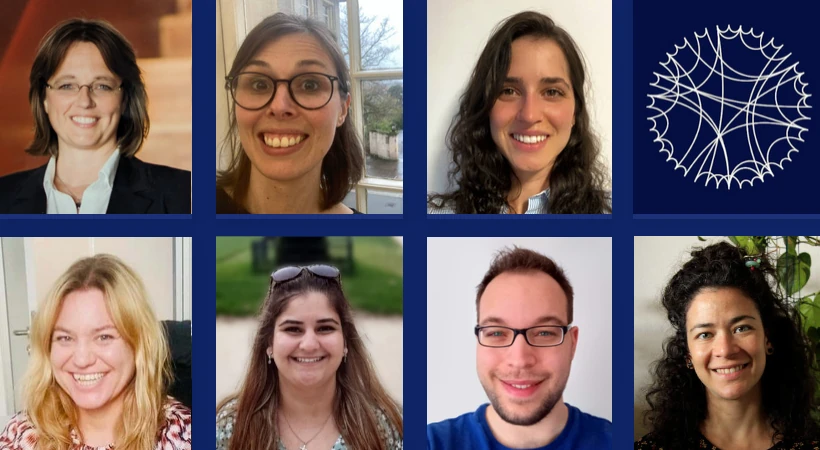
The STRUCTURES Young Researchers Convent (YRC) has elected Thalia Traianou, Fabius Krämer, and David Maibach as its new speakers for 2026 in its recent General Assembly. We warmly congratulate the new speaker team and wish them a successful start!
Reflecting on her motivation to run for the position, Thalia Traianou says: “I have benefited enormously in my academic path from communities that made me feel visible and connected as an early-career researcher, and I want to help shape that for others.” Fabius Krämer emphasizes the importance of interdisciplinary exchange: “I am committed to encouraging and enabling young researchers to broaden their knowledge beyond their primary research area. STRUCTURES provides an excellent environment for this, and I would be glad to actively support this mission.” David Maibach, who previously served as a YRC speaker during his PhD in Heidelberg, adds: “I have already been a speaker during my PhD here in Heidelberg and thoroughly enjoyed the work that comes with this position. For me, there lies great potential in having an overarching organisation for young scientists through which they can discuss, exchange, and actively contribute to the cluster's future.”
The new speaker team succeeds the previous speaker trio, Ricardo Waibel, Freya Jensen, and Marvin Sipp, whom we warmly thank for their exceptional commitment and outstanding service to the Young Researchers Convent. Their dedication, approachability, and sustained engagement significantly contributed to fostering a vibrant and supportive community.
The Young Researchers Convent (YRC) is the dedicated early-career platform within the STRUCTURES Cluster of Excellence. It brings together Bachelor's and Master's students, PhD candidates and postdoctoral researchers who are either funded by STRUCTURES or working on research topics that align with the cluster’s mission. The YRC supports early-career researchers in realizing their own projects – ranging from travel funding for conferences and workshops worldwide to the organization of seminars and talks. Any early-career researcher working in a field connected to STRUCTURES can apply for YRC membership.
The YRC speakers take responsibility for organizing funding calls, evaluating applications for travel and event support, processing membership requests, and representing the YRC as full members of the Steering Board – ensuring that the perspectives of early-career scientists help shape the future direction of the cluster. In this way, the YRC plays a central role in strengthening early-career independence and support, while fostering exchange, collaboration, and a strong sense of community across all career stages within STRUCTURES.
Further information:
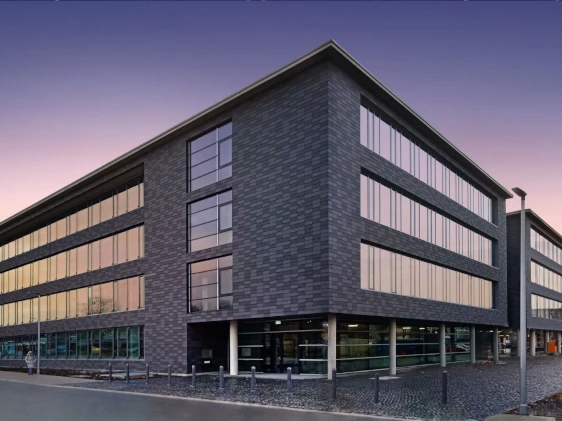
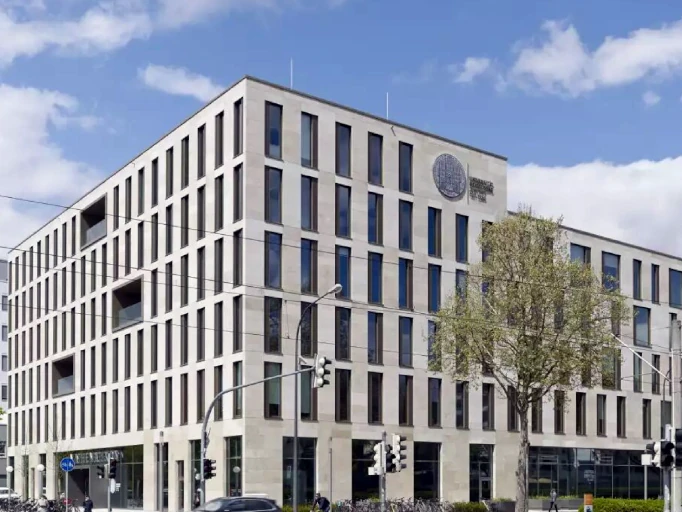
Following an interim phase at Mathematikon, STRUCTURES has relocated its Neuenheimer Feld offices to their designated location on the third floor of the “EINC” building INF 225a. Together with the theory centre Collis Philosophicus at Philosophenweg, INF 225a now serves as one of two main locations where the cluster has an office presence, and as a hub for its community and activities.
The STRUCTURES Project Management Office plays a key role in supporting and coordinating these activities. It offers comprehensive services for all cluster members, ranging from administrative support related to membership, travel funding, and the guest programme to the coordination of internal and public events. In addition, the office oversees equal-opportunity initiatives including the STEPS Programme, the parent–child offices “KIDS” operated in collaboration with IsoQuant, and the cluster’s outreach activities.
Directly adjacent to the new office rooms at EINC is Oberstübchen – the cluster's main scientific venue for seminars, workshops, and meetings. The Oberstübchen is part of STRUCTURES College, an academic unit dedicated to fostering international scientific exchange across disciplines and career stages. Activities of the College include the guest programme, the weekly STRUCTURES Jour Fixe as a central forum for exchange, and research-oriented teaching measures – one example being the regular meetings of STRUCTURES' “Crowds” on topics such as Mathematical Physics, Computational and Quantum Physics. The expression “Oberstübchen” is a German colloquial for brain, literally “upper room.”
For practical information related to meetings and room bookings of the Oberstübchen, all STRUCTURES members are welcome to contact office@structures.uni-heidelberg.de.
As part of its broader role as a research facility, EINC is becoming a hub for STRUCTURES' experimental activities in the direction of physical computation – and home to the groups of various STRUCTURES members, including Markus Oberthaler, Wolfram Pernice, Johannes Schemmel, and Julian Schmitt. The central approach to research is interdisciplinary – bridging physics with computer science in order to explore new paradigms of information processing. Physical computation refers to approaches going beyond von-Neumann computing architectures, building on physical structures available in highly controllable physical systems based on electrons, photons and atoms.
Contact address:
STRUCTURES Project Management Office
Im Neuenheimer Feld 225a and Philosophenweg 12
D-69120 Heidelberg
+49 (0) 6221-54 9186
office@structures.uni-heidelberg.de
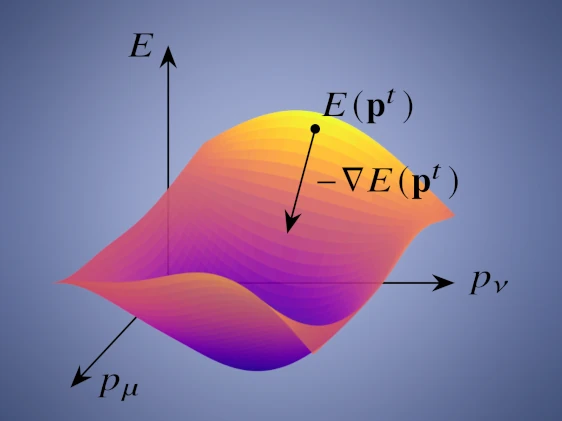
Orbital-free approach enables precise, stable, and physically meaningful calculation of molecular energies and electron densities.
By applying new methods of machine learning in quantum chemistry research, Heidelberg University scientists have made significant strides in computational chemistry. They achieved a major breakthrough towards solving a decades-old dilemma in quantum chemistry – the precise and stable calculation of molecular energies and electron densities with a so-called orbital-free approach, which uses considerably less computational power and therefore permits calculations for very large molecules. Within the STRUCTURES Cluster of Excellence, two research teams at the Interdisciplinary Center for Scientific Computing (IWR) have refined a computing process long held to be unreliable such that it delivers precise results and reliably establishes a physically meaningful solution.
How electrons are distributed in a molecule determines its chemical properties – from its stability and reactivity to its biological effect. Reliably calculating this electron distribution and the resulting energy is one of the central functions of quantum chemistry. These calculations form the basis of many applications in which molecules must be specifically understood and designed, such as for new drugs, better batteries, materials for energy conversion or more efficient catalysts. Yet such calculations are computationally intensive and quickly become very elaborate. The larger the molecule becomes or the more variants need checking the sooner established computing processes reach their limits. The “Quantum Chemistry without Orbitals” project is positioned here at the interface of chemistry, physics, and AI research.
In quantum chemistry, molecules are frequently described using density functional theory, which allows for the fundamental prediction of chemical molecular properties without having to calculate the quantum mechanical wave function. The electron density is used as the main quantity instead – a simplification that finally makes computations practicable. This orbital-free approach promises especially efficient calculations but until now was considered barely useful, since small deviations in the electron density led to unstable or “non-physical” results. With the aid of machine learning, the Heidelberg method finally solves this precision and stability problem for many different organic molecules.
The new process called STRUCTURES25 is based on a specifically developed neural network that learns the relationship between electron density and energy directly from precise reference calculations, capturing the chemical environment of each individual atom in a mathematically detailed representation. A unique training concept was pivotal: the model was trained not only with converged electron densities but also with many variants surrounding the correct solution – generated by targeted, controlled changes in the underlying reference calculations. This computing process is therefore able to reliably find a physically meaningful solution for molecular energies and electron densities even in case of small deviations. It remains stable without “getting lost” in the calculation, the Heidelberg researchers emphasize.
In tests on a large and diverse collection of organic molecules, STRUCTURES25 achieved a precision that can compete with established reference calculations, for the first time demonstrating a stable convergence using an orbital-free approach. The performance of the method was demonstrated not only on small examples but on considerably larger “drug-like” molecules as well. Initial runtime comparisons prove that the computing process can scale better with growing molecule size and hence increase the speed of the calculation. Calculations formerly considered too elaborate are now within reach.
“Orbital-free density functional theory long held the promise of faster calculation – but not at the expense of the physics, please,” states Prof. Dr Fred Hamprecht, who leads the Scientific Artificial Intelligence research group at the IWR. “With STRUCTURES25, we demonstrate for the first time that computing can include both: chemically precise energies and a stable, practical optimization of the electron density.” Prof. Dr Andreas Dreuw, head of the Theoretical and Computational Chemistry research group at the IWR, adds: “Optimization is no longer unstable, and hence a major step forward for considerably faster predictions with high precision. Now simulations are within reach that classic processes could barely touch, such as when many configurations or very large molecules need investigating.”
Underpinning the work was the close interdisciplinary cooperation of the research groups within the Cluster of Excellence STRUCTURES: A Unifying Approach to Emergent Phenomena in the Physical World, Mathematics, and Complex Data at Heidelberg University. Here researchers from various disciplines study how structures emerge, how they can be detected in large datasets, and the benefits they offer science and technology. In addition to the support provided by the Cluster of Excellence, funding also came from the Wildcard program of the Carl-Zeiss-Stiftung, which supports especially innovative and particularly bold projects. The research results were published in the “Journal of the American Chemical Society”.
Original Publication:
R. Remme, T. Kaczun, T. Ebert, C. A. Gehrig, D. Geng, G. Gerhartz, M. K. Ickler, M. V. Klockow, P. Lippmann, J. S. Schmidt, S. Wagner, A. Dreuw, and F. A. Hamprecht, Journal of the American Chemical Society, DOI: 10.1021/jacs.5c06219.
Further information:
We are happy to announce the workshop “Pathways into Mathematics of SPDEs”, taking place from Monday, March 9, 2026 to Wednesday, March 11, 2026 in Heidelberg. The workshop is a joint initiative by doctoral students from Karlsruhe's KCDS and Heidelberg's HGS MathComp. Its aim is to provide early-career researchers with a smooth introduction to this highly relevant topic.
Stochastic partial differential equations (SPDEs) are a notoriously challenging topic in combining advanced theory of both partial differential equations and stochastic processes. However, it is due to this sophisticated combination of both concepts that they emerge as a powerful and versatile tool for modelling highly diverse phenomena in the sciences. While incredibly useful to describe these systems, utilising them jointly with data and measurements to accurately determine characteristics or provide reliable predictions is still very much a work in progress in (applied) mathematics.
A central challenge, especially for junior researchers with an interest in the field, is that there is a major gap to overcome from available lecture materials, graduate courses and books to current problems and challenges in applied mathematics for SPDEs. The workshop aims to support doctoral students in closing this gap, growing a network of junior researchers and fostering interdisciplinary collaboration.
Registration is open until February 15 via the following link:
https://ssp.math.uni-heidelberg.de/WS_SPDEs_2026/Registration/reg.html
Please note: If you miss the deadline but have a strong interest in the workshop, you are welcome to contact the organizers – late inquiries may still be considered depending on availability.
The workshop is hosted by the research group of Prof. Claudia Strauch, and organized by Timo Dörzbach, Louise Kluge, Josef Martínek, Hans Reimann and Maximilian Siebel. The STRUCTURES Cluster of Excellence is proud to support this workshop.
Further information: